
Almost every seasoned founder we collaborate with carries an agency horror story from a past venture.
The pattern is remarkably consistent: the initial discovery calls with the agency sales director were polished, the pitch deck featured impressive logos, and the contract timeline promised a working MVP in eight weeks.
Around week ten, communication turns sporadic. Demos show clickable Figma designs rather than functional code. Scope debates consume meetings. Six months and $80,000 USD later, the startup holds broken software, no clean git commit history, and a damaged launch window.
"Do not evaluate engineering partners by the polish of their sales presentations. Evaluate them by live production systems you can test right now on your own device."
1. The Bait and Switch Engineering Team
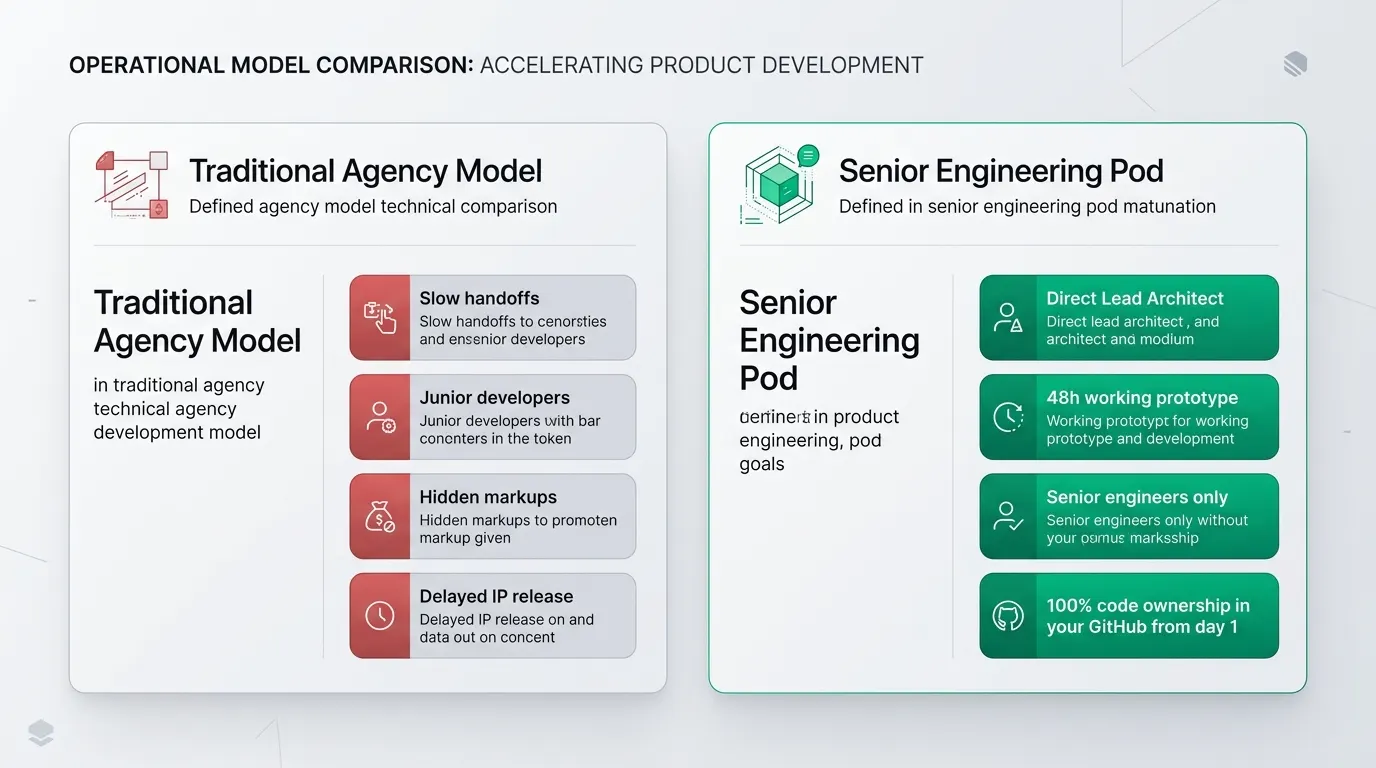
The most widespread structural flaw in traditional software agencies is the talent handoff. High salaried senior architects attend the sales calls to answer your technical questions and establish credibility. Once the contract is signed and the deposit clears, your codebase is handed down to fresh graduates or low cost subcontractors juggling four client accounts at once.
Before signing any agreement, ask this question point blank: Will the specific engineers sitting in this discovery meeting be the individuals architecting and committing code to my repository?
2. The 48 Hour Working Prototype Litmus Test
A capable software development partner should not require a month of meetings to prove they comprehend your core operational workflow. Within forty eight hours of project kickoff, they should present a functional, interactive prototype demonstrating your primary user journey.
At NextGen, for new product ideas, we deliver a clickable prototype within 48 hours of kickoff. If we are engineering a logistics system, you will see vehicles move on a live map within two days. If we cannot prove our technical velocity immediately, you should not trust us with your production capital.
3. Intellectual Property: Private GitHub Repositories on Day One
Some software development firms deliberately retain your code in their private repositories, releasing access only upon final payment or locking clients into long term proprietary hosting contracts. This creates dangerous vendor lock in and imperils future fundraising due diligence.
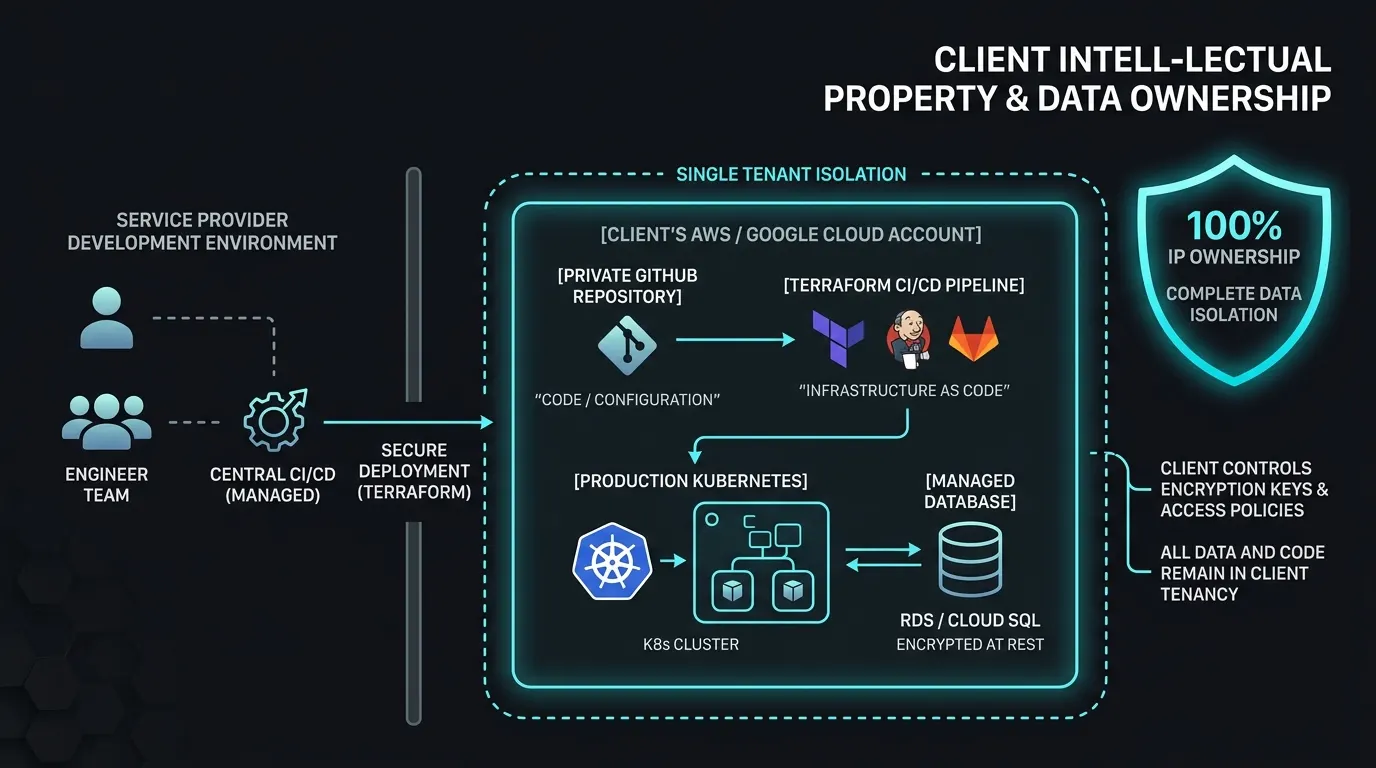
Insist on three non negotiable clauses before issuing any down payment:
- Repository Tenancy: All source code commits occur directly in a private GitHub or GitLab organization owned by your company.
- Cloud Tenancy: All production infrastructure is provisioned inside your AWS or Google Cloud account via Terraform scripts.
- 100% IP Assignment: Every line of code, schema design, and asset created is your exclusive intellectual property from the moment of creation.
4. Post Launch Hypercare and Warranty
Software engineering does not conclude when code merges to the main branch. The true test of a system begins on launch day when real human users introduce unpredictable edge cases, odd network drops, and unexpected usage spikes.
Ask prospective partners what their post launch support looks like. If they immediately pitch an expensive monthly retainer before fixing initial launch bugs, look elsewhere.
We provide a sixty day post launch engineering warranty on every production delivery. If an issue surfaces within sixty days of going live, our senior engineering pod resolves it under warranty at zero additional cost to your business.